


By Chad Raines, President of the American Solar Grazing Association (ASGA).
I am a 4th-generation farmer, and our family farm, Key Farms, was on the brink of bankruptcy. We are cotton farmers in West Texas. Years of drought and low commodity prices, along with rising input costs, were too much for us to handle. Something had to change. Every year, my hope and prayer was to just break even. That is no way to run a business. The definition of insanity is doing the same thing over and over again, expecting different results. I had to do something, or we would lose it all.
If you want to talk about pressure, I had it. Imagine knowing that your great-grandfather, grandfather, mom, and dad all kept the family farm going, and I was going to be the one to lose it all. The bank would put the land, equipment, and everything else up for auction. Not to mention the embarrassment of not making it. My grandfather was able to survive the farm crisis in the 1980’s, where interest rates were around 18%. Cotton was everything to our family–it was all we knew. But we were selling cotton for $0.60 a pound, and that was what my grandfather was selling it for in the 1970s (and believe me, the expenses are higher now than they were in the 70s). I had to do something.
So, I tried something new: sheep. I had a family friend raising sheep and had been talking to me about switching to it. So, after a lot of analysis, thought, and prayer, I made the transition. It was better and lasted for several years, but it wasn’t enough. I could make it each year and have a little money left over, but it wasn’t enough to knock out the mountain of prior farm losses that we had incurred for many years.
Then I heard of something crazy: AgriSolar. What’s that, you ask? It’s incorporating agriculture on solar farms. Specifically, grazing my sheep on the solar farms. I was told about the American Solar Grazing Association (ASGA) at solargrazing.org, and it changed my life. There was an entire community out there doing this, and they had educational and technical assistance materials available to help folks new to the community. I would work all day at the farm and come home, and after we put the kids to bed, I would watch different webinars about how solar grazing works. I was consumed by the idea, and I knew it was the answer that my family needed.
Solar companies pay us to manage the vegetation on the solar farms. It’s not as simple as putting sheep out there and letting them eat – that’s what I learned from ASGA. There is a great deal that goes into it. The solar companies have all of this land under the panels that need to be maintained, and water and fencing need to be constantly managed. So, I put my “4-legged lawn mowers” out there and let them do their thing, while I managed and stewarded the land. I made sure they were healthy, optimized the flock for solar, worked with guardian dogs and shepherds, and learned the ins and outs of solar grazing from the ground up.


One of the biggest complaints I hear is that solar companies are taking land out of agricultural production for solar panels. But we are keeping it in agriculture. We are “dual cropping” - we harvest lamb, and they harvest the sun.
AgriSolar has come a long way since I began 4 years ago. In the beginning, companies would laugh at me when I proposed putting sheep out there instead of the traditional zero-turn mowers. Now, it is becoming a more accepted practice thanks to many good graziers and the hard work of ASGA.
In fact, I get jobs because I bring sheep into the equation, not just mowers.
We are doing so much more than keeping the grass down with the sheep; we are healing the land. I know what I was doing to our land when I was a traditional row crop farmer. I used synthetic fertilizers, herbicides, pesticides, and growth inhibitors along with multiple mechanical plowings. I wasn’t doing anything to create healthy soils; I was killing my soil. But now, on solar, I am rebuilding the soil with the sheep, naturally fertilizing it. I’m not spraying pesticides, so the insects and bees are thriving, and plants are being pollinated – just how nature intended it to be.
I would’ve never believed it unless I witnessed it firsthand, but the grass actually grows better under the shade of the panels. I know my sheep like having panels to get out of the hot Texas sun. The sheep usually get up at first light and graze until around lunchtime, then go back to water and under the shade of the panels. They stay there until late afternoon, then they graze until dark. It really is a match made in heaven.
I have a couple of initiatives that I’m pretty excited about. First, I am mentoring several people who are trying to break into AgriSolar. I was mentored by Ely Valdez of South Texas Curbing. Ely is probably the best solar grazier in the country. He took me in under his wing and showed me the ropes. Now, I’m trying to pay that forward by helping others. Secondly, I am about to plant a 20 to 30-acre garden at one of my sites, planning to donate half of the food produced to the local food banks in our community. No matter the struggles our farm has been through, we are strong and resilient, and I always want to help others who are in need of assistance.
As I mentioned, it saved our family farm. I’m not going on lavish vacations or owning multiple homes, but I can make our note payments at the bank and whittle away at the mountain of debt. Most importantly, it allowed our two sons to return to work with us on the family farm. Our oldest, Ross, graduated from college with a business degree and is now working side by side with me to keep everything going smoothly. Jackson, our youngest, is a junior in college and plans to come back and work with us. We’ve even been able to increase our flock a little over the last couple of years.
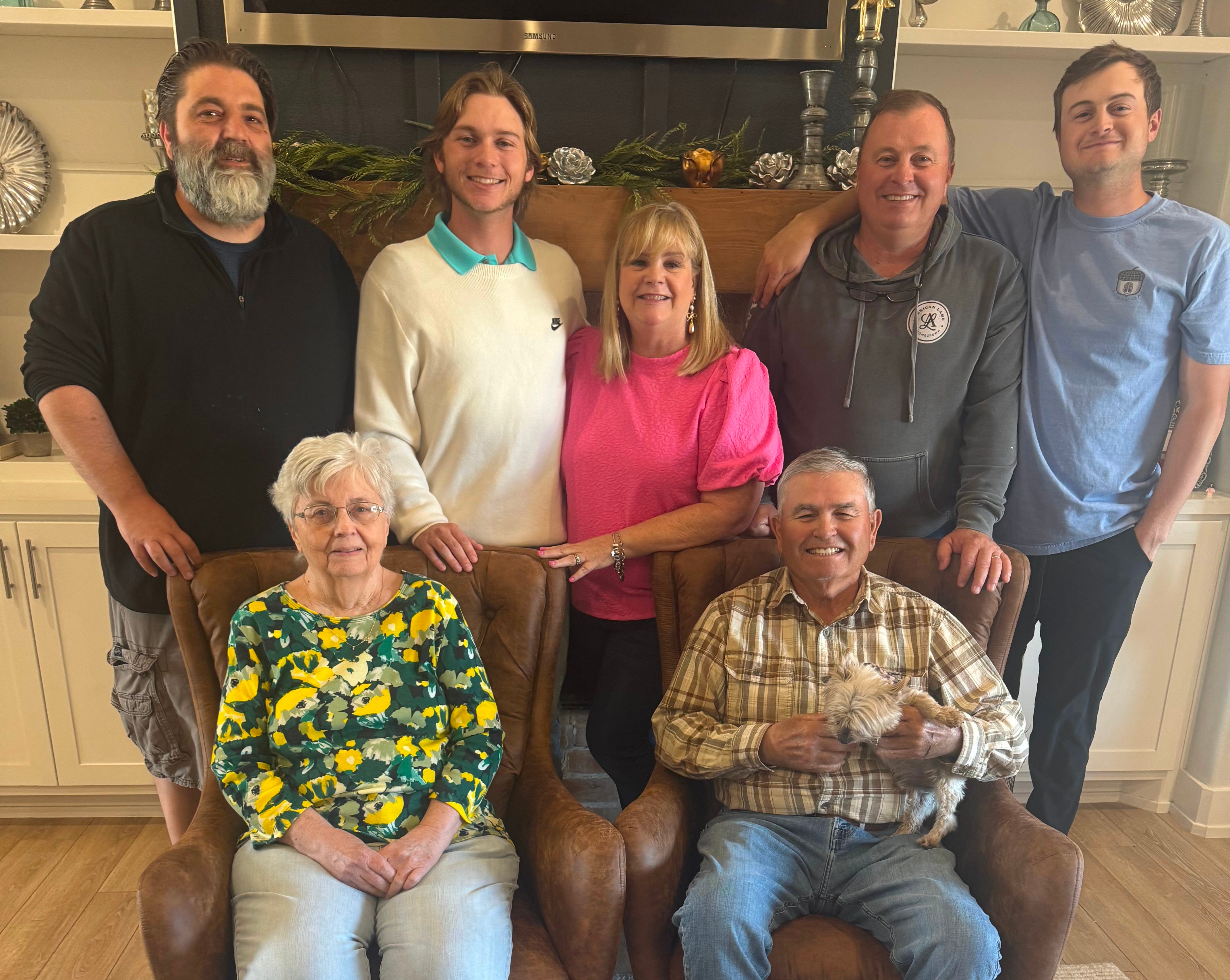
Chad Raines is President of the American Solar Grazing Association (ASGA).
And I’m curious - are you transporting the sheep back and forth or do they live at/near the panels?
Great story! Are farmers able to put solar on their own lands? I'm curious whether they can afford the capex to install and own their systems or if they can get leases from solar companies for renting their acres for the install?