


John Williams is Senior Vice President of Technical Services and External Affairs at Southern Company.
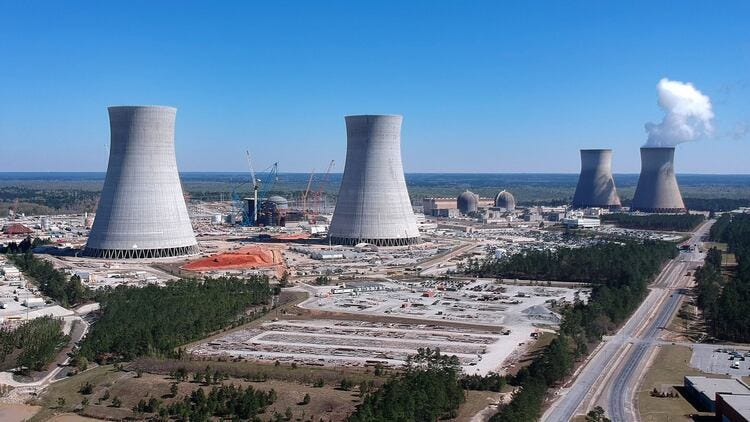
1. Plant Vogtle is now the largest generator of clean energy in the U.S. What does that tell us about the role of nuclear in America’s energy future?
Plant Vogtle becoming the largest clean energy generator in the country tells us something important: nuclear energy isn’t just part of America’s energy future, it’s foundational to it.
As we see electricity demands grow and expectations for reliability increase, you need sources that can operate around the clock and at scale. Nuclear delivers that. It provides long-term power – these are 80-year assets – with proven performance and supports energy security in a way no other clean resource can on its own.
Vogtle also demonstrates what’s possible when you invest for the long term: Assets like these not only support communities, but they strengthen the grid and deliver clean energy Americans can count on every day.
Finally, Vogtle reinforces that nuclear can be deployed at meaningful scale in the U.S. when projects are approached with discipline and a long‑term view.
2. How important is nuclear energy’s reliability as electricity demand grows in Georgia? In the United States?
Reliability is essential to why nuclear energy matters, especially as electricity demand continues to grow in Georgia and across the country. When people think about electricity supply, they are really focused on two things: first, does the light come on when they flip the switch, and second, how much does it cost? Nuclear helps answer both questions because our units run around the clock and provide a stable source of power when customers need it most.
Just as important, nuclear also brings a long-term cost advantage because its fuel costs are relatively low and predictable compared with many other sources of generation. That means nuclear supports affordability not just by producing large amounts of electricity reliably, but by helping shield customers from fuel price volatility over time.
We’re seeing transformational growth in Georgia, necessitating 10 GW of company-owned new resources under construction and in service by the end of this decade, driven by economic development, data centers, and electrification. Meeting that demand requires energy sources that are available around the clock, in all conditions. Nuclear provides that reliability every day.
At the national level, the same principle applies. As we modernize the grid and add more variable resources, nuclear’s ability to operate continuously at scale becomes even more important. It provides a stable foundation for reliability, energy security, and long-term affordability.
3. On the local level, how have residents embraced having nuclear in their own backyard? Is nuclear energy a good neighbor?
What we consistently see in our footprint, is that when communities actually live next to nuclear plants, they tend to be some of nuclear energy’s strongest supporters. At Georgia Power, we have this saying that “we’re a citizen wherever we serve”, and we see that in our communities.
That starts with trust. We recognize that our communities have entrusted us with the responsibility of safe and reliable operation, and we take that responsibility seriously and with great pride. These plants aren’t abstract infrastructure, they’re operated by people who live nearby, send their kids to local schools and participate in the community every day. Over time, residents see firsthand what nuclear looks like in practice: safe operations, a long-term commitment to excellence and a strong sense of responsibility to the community.
Nuclear plants also tend to be very good neighbors in tangible ways. They provide stable, high-quality jobs; they contribute significantly to local tax bases; and employees oftentimes are very involved in their community in many ways. That kind of long-term and active presence creates relationships that matter.
Just as important, people value reliability. When storms hit or demand peaks, nuclear plants continue operating, providing steady electricity people can count on. That reliability earns confidence, especially in regions that understand how essential dependable power is to everyday life.
4. Vogtle Units 3 and 4 were the first new nuclear builds in the U.S. in over 30 years. What does it say about America’s ability (or inability) to build energy infrastructure today?
Vogtle sends a clear message: the United States can still build large, complex energy infrastructure, but success depends on the right policy in place to allow companies to build and those companies need discipline, execution, and a willingness to apply lessons learned.
After more than 30 years without new nuclear construction, the country had lost much of the workforce, supply chain and institutional muscle required for projects of this scale. Vogtle wasn’t just about building two reactors; it was about rebuilding an entire ecosystem — restoring engineering capability, qualifying suppliers, and training a new generation of nuclear workers who now know how to build plants, from craft labor to engineers and technicians. It also helped rebuild the regulatory experience that is necessary for projects like this. Our regulator had not overseen new nuclear construction in a long time, so all of those capabilities had to come together at once.
What’s encouraging is that once you rebuild those capabilities, they’re reusable. Unit 4 was built 20% cheaper and commissioned in half the time than Unit 3 because we applied lessons learned. We now understand the value of mature designs, disciplined project management, and early alignment across engineering, construction, operations, and regulatory processes. Those lessons significantly reduce risk going forward and reinforce a very important point: these projects get better with repetition and standardization.
At Southern Nuclear, we see it as our responsibility to share those lessons broadly, because the success of the next projects matters not just to individual companies, but to the future of nuclear energy in this country.
So I’d say Vogtle reflects both a challenge and an opportunity. It highlights the consequences of long periods of underinvestment in infrastructure, but it also demonstrates that with consistency, repetition and the right policy environment, the United States can deliver large-scale, reliable energy projects again.
The key now is not to treat Vogtle as a one-off. If we continue to build using proven designs and applying what we’ve learned, we strengthen our ability to deliver the infrastructure required to meet growing demand, maintain reliability and support long-term energy security.
5. If the U.S. wants more projects like Vogtle, what needs to change to make large-scale energy builds faster and more cost-effective?
If the U.S. wants more projects like Vogtle, the most important shift is toward durable policy that supports repetition.
Vogtle showed us that America can still build large-scale energy infrastructure, but it also showed us the cost of doing it after a long pause. When you go decades without building, you experience those first-of-a-kind project challenges and lose skilled workforces, domestic supply chains and construction experience. Rebuilding all of that at once is inherently harder and more expensive and we don’t want to go rebuild that again in 10 or 20 years.
The biggest lesson is that these projects get faster and more affordable when they stop being one-offs. Complete and mature designs matter. Standardization matters. A ‘design once, build many’ approach allows learning to compound over time, which directly reduces cost and schedule risk. Vogtle Unit 4 benefited from the lessons of Unit 3, and that improvement was the result of repetition and discipline, not chance.
There’s also a need for durable policy, regulation and financing. Not less rigor, but predictable expectations and risk-sharing structures that recognize first-of-a-kind realities while protecting customers. The takeaway from Vogtle isn’t that building large infrastructure is too hard; it’s that doing it sporadically is costly. Doing it consistently is how you build capability, affordability and long-term success. We’ve seen this in other countries that have adopted standardized nuclear development programs: they design once, build many, work through the first-of-a-kind challenges, and then repeatedly deploy reactors on schedule and on budget.
6. Vogtle went through a complex federal and state approval process. How did permitting timelines affect the project, and what reforms could help accelerate future clean energy projects?
Yes, Vogtle went through a long, complex, and very rigorous federal and state approval process and that rigor matters.
For nuclear energy, strong, independent oversight is essential. The depth of review builds public trust, reinforces a strong safety culture, and ensures plants like Vogtle can operate safely for generations to come. That scrutiny ultimately strengthens projects, and it helped establish a licensing framework that future builds can rely on with more confidence.
At the same time, the length and sequencing of the process had real consequences. When I look back at the federal licensing timeline for Vogtle between the applications for the early site permit, the limited work authorization and ultimately our combined construction operating license, we were in licensing for roughly five years. Reviews often occurred one after another instead of in parallel. Requirements evolved. Agencies worked on different timelines. That uncertainty makes large projects harder to plan and more expensive to deliver.
The way forward isn’t about relaxing standards, it’s about predictability.
Policies in the ADVANCE Act and the executive orders from the administration aimed at modernizing permitting are an encouraging step in the right direction. Those are really starting to shorten timelines, and we believe that there’s a real opportunity to get plants licensed quicker with the same amount of rigor, especially if you use a standard design like an AP1000.
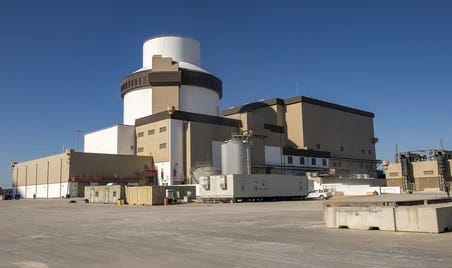
Westinghouse has submitted Revision 20 of the AP1000 design certification, which takes the design we used at Vogtle and updates it with what we learned during construction and early operations. In effect, Vogtle Unit 4 is now the standard AP1000 for future deployment anywhere in the world.
That matters because a proven, standardized design can significantly shorten the licensing timeline and help future projects move faster. Just as important, none of that reduces rigor. Strong NRC oversight remains essential to safety, public trust, and long-term performance.
The real opportunity now is to build on what we’ve already done. We know how this plant works, and we know how to build it. If we pair that experience with a more predictable regulatory pathway, we can move the next generation of nuclear projects forward much more efficiently.
7. There’s a growing national conversation about permitting reform: how critical is it to ensuring the U.S. can actually deploy clean energy at the scale we want to see?
Permitting reform is absolutely critical if the U.S. is serious about deploying clean energy at the scale we’re talking about.
Across all major energy infrastructure like nuclear, natural gas, transmission, renewables, etc., long and uncertain permitting timelines introduce risk that can delay projects or prevent them from moving forward at all.
For capital-intensive projects like nuclear, predictability matters even more. These projects require large upfront investments and long planning horizons, and developers and investors need confidence in both the scope and timing of regulatory reviews.
The goal of permitting reform shouldn’t be to weaken environmental or safety standards – those are foundational. The real opportunity is to improve coordination, transparency and schedule certainty across agencies, so projects can move forward with confidence once requirements are defined.
If we want to achieve total energy dominance at meaningful scale in this country, permitting systems have to be tough, independent and credible while also being predictable enough to support efficient execution.
8. As a whole, Vogtle can power roughly a million home and businesses. How important are projects like this for energy security and economic growth in the Southeast?
Large projects like this are critically important because they provide the scale and reliability that both energy security and economic growth depend on.
From an energy-security standpoint, having substantial, domestic generation that runs around the clock strengthens the resilience of the grid. These facilities aren’t dependent on weather conditions or real-time fuel delivery, and their fuel can be secured years in advance. Roughly eight trucks provide 18 months of fuel for each Vogtle unit. That kind of predictability matters as electricity demand grows.
Economically, dependable electricity is a prerequisite for growth. Communities and businesses invest when they know power will be reliable and affordable over the long term. We saw this firsthand with Vogtle, as several businesses moved to Georgia and invested in Georgia because they saw the state investing in large energy projects like Vogtle 3 & 4.
So, you see that large, long-lived energy projects create sustained value beyond electricity itself. These projects support skilled jobs, stable tax bases, and regional supply chains for decades. In that sense, projects like this serve as economic anchors that help regions grow with confidence.
9. From a national perspective, how does investing in large, clean energy sources like nuclear strengthen American energy dominance on a global scale?
From a national perspective, investing in large, clean energy sources like nuclear strengthens American energy dominance in several fundamental ways.
First, it reinforces energy security. Large-scale nuclear generation provides reliable, domestic power that operates around the clock, independent of weather or real-time fuel delivery. Fuel can be secured years in advance, which adds resilience to the system at a time when electricity demand is growing and energy reliability increasingly intersects with national security.
Second, it supports long-term economic strength. Reliable power is the foundation for manufacturing, advanced technology, data centers and other energy-intensive industries that drive innovation and growth. Nuclear units are designed to operate between 60-80 years. When the U.S. invests in large-scale infrastructure designed to operate for decades, it signals stability and confidence both to domestic businesses and to global markets.
And finally, it’s about competitiveness. Countries that can build and operate reliable energy at scale aren’t just meeting their own needs, they’re shaping global standards, strengthening supply chains, and maintaining leadership in technology and industry. Investing in large-scale nuclear helps ensure the United States stays competitive in a world where energy reliability and economic strength are increasingly inseparable.