



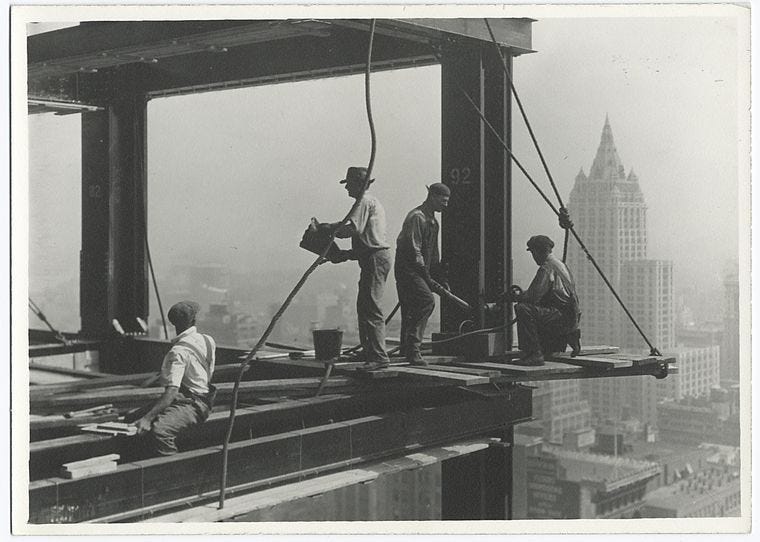
The United States once built at a speed that would give the people of today whiplash. New Yorkers could leave the city on an extended sabbatical and return thirteen months later to find the Empire State Building erected where the Waldorf-Astoria once stood. In 2026, the online conspiracy theorists would claim such a massive structure could only be built so quickly with the help of the Illuminati. “How else could it have possibly been done?!” they’d enthusiastically talk-scream to hundreds on livestream.
When did our belief in ourselves get so small?
A surface-level scan does not immediately reveal this truth. How can it when the extraordinary has now become ordinary? In the whirlwind of face-scanning cellphones, self-driving cars, artificial intelligence at our fingertips, and ad infinitum apps for needs we did not even know we had, we trust technology to carry our lives forward for us. I cannot help but wonder if this growing reliance on technology is because it is far more efficient than the alternative.
We often think of the quintessential American Dream as one that allows people the opportunity to build a better life.
That ability to build, however, is growing more and more strained by red tape and outside groups taking advantage of it, but what if it wasn’t?
What would our country look like today if we acted on the blueprints adorning the desks of doers across the nation? Fortunately, we need not extend the imagination too far, when all of the projects currently stalled out by permitting reform are public information.
Let’s start with energy. The most important thing to understand is that it would be abundant, affordable, and intentionally built to account for the unique needs of each region. Rather than punishing folks with decades of review and endless fees, people would be rewarded for their ambition with reasonable bureaucratic expectations, which would mean more energy hitting the grid and more jobs at home. We would look back on the time when a child could start kindergarten and graduate high school before an energy project could even get permission to break ground as an archaic period marked by overabundance of caution and overreliance on bureaucracy. “Why outsource jobs, put more demand on the grid, and drive up the cost of living when we could just build energy here?” we would shrug off as we flip on the greenhouse lights for another exciting season of attempting to grow the largest winter squash.
American-made solar panels, sited on rooftops and above sprawling parking lots, would power the Sunshine State. The wind sweeping over ranchland across the Great Plains would power the schools and homes connected to their new transmission lines. The West has taken advantage of the radiant heat from the geothermal wells beneath their feet, while new nuclear plants spring up across the country to anchor a new generation of industry in which communities produce clean, reliable power with pride. The abundant energy flowing into the grid results in families confidently turning up the heat in January without having to negotiate the action against their grocery budget. The couple opening their dream ice cream shop doesn’t think twice about installing a second soft-serve machine or hiring part-time help. With industry returning home, young people would find apprenticeships in their hometowns, allowing them to build careers and put down roots close to home.
It’s not only about building more energy, more beautiful buildings, or more efficient transportation infrastructure; our natural heritage would also flourish. It’s not just energy projects affected by lack of permitting reform.
We would see more coho salmon and steelhead returning to the rivers of the Pacific Northwest thanks to the outdated road culverts we moved out of the way. America’s shorelines would be protected with wave-absorbing marsh grasses and oyster reefs, while young fish and crabs enjoy the shelter below. More herons and egrets fly above the Everglades than ever before due to the marsh we finally let flow again. Folks living in the West would draw their drinking water from more resilient, healthier watersheds. Across the country, Americans would recognize forests by the laughs shared on their trails, not the headlines they make during wildfire season.
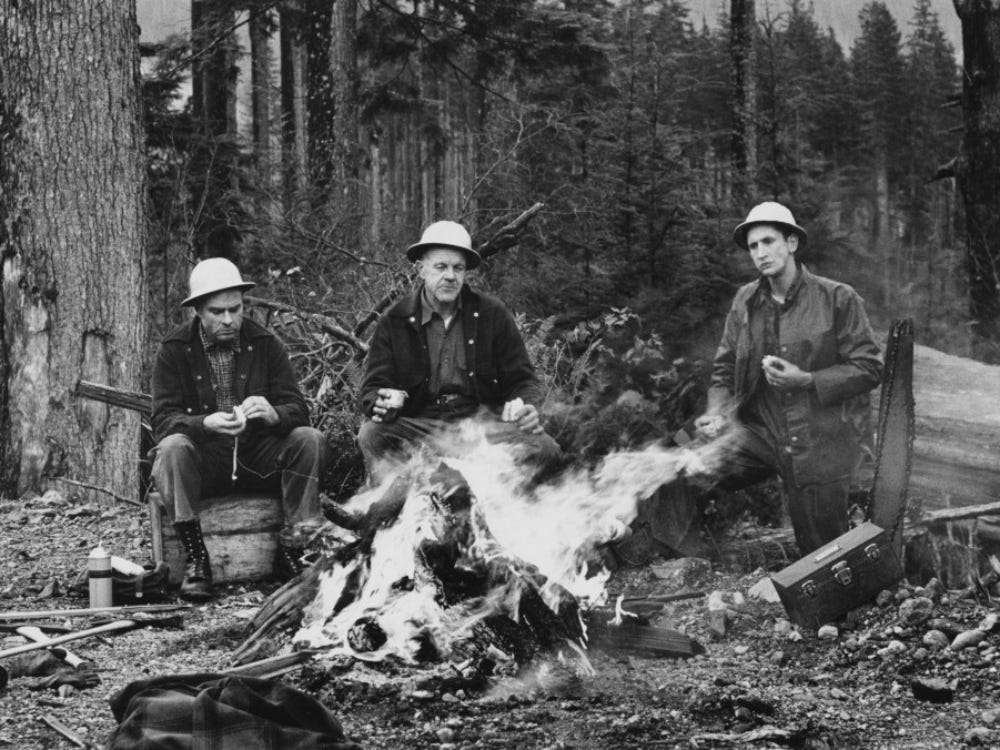
The Dakotas would be filled with the calls of ducks returning each spring to the restored prairie wetlands. In Wyoming, the seasonal migrations of pronghorn and mule deer would be assisted by the natural bridges we built for their safe journey. In Appalachian communities, the streams previously tainted by mine drainage would be deep into restoration efforts to bring back the native fish. Across the country, the work would be everywhere and endless, so much so that conservation and abundance would start to become part of the scenery. Children growing up watching beautiful places come back to life due to the tireless efforts of the adults in the room would then grow up to carry the torch. Another bridge carrying a herd across a highway. Another restored forest. Another stream restored to support local flora and fauna. Another invasive species successfully managed. Another local fish population restored. So many more places to take our loved ones to, be proud of, and work to conserve for future generations.
Our country’s ambitions would be something we could see from our front porch as new projects pop up, feel in our wallets with the money left after paying bills, and breathe in through the fresh air filled with singing birds. This spirit of building better would carry into our daily lives, giving people the confidence to raise a family, start that business, and step up as the stewards of their communities.
Another way to think of the American Dream is as a promise. A promise to its citizens that the values we hold closest to the heart of this nation are indeed the values that build a better life. In that sense, permitting reform, or letting Americans build, is absolutely necessary to restore that promise. The citizens of the leading nation in the world should reasonably expect to be able to propose a meaningful energy, conservation, or construction project and receive a timely, rational decision. This ask is simply efficiency, not some radical restructuring of sanity (or the environment, despite what the litigation-happy green groups tout).
Every novel, groundbreaking step forward came from men and women bold enough to lead ideas that once seemed audacious. What monuments, restoration zones, energy plants, plazas, or bridges might our generation leave behind for the world to travel to and enjoy one day? More importantly, how much longer are we going to let them stop us from building them?
Lucero Cantu is the Creative Director at the American Conservation Coalition (ACC).
A nice idea, but in practice, trust has been completely broken by governments allowing developers to destroy nature in the name of "progress". When I hear permitting reform now, my mind immediately goes to "They're gonna make it easier to destroy shit", just like in the current terrible BAAJA bill.
Trust must be repaired, accountability restored, and somehow we the people need to have faith once again that the government won't act like this joke of an administration has for the past two years.
This is a fantastical article with absolutely no basis in reality.
First, the fallout in rapid and unregulated development is what necessitated current regulatory processes in the first place (not that all of them are as efficient as they should be). It’s cute to talk about the Empire State Building being built in very little time without mentioning the environmental fallout to the places those resources came from by operating that “efficiently”.
Second, there is absolutely nothing to say the average American would be living in dreamland with deregulation for energy and development. More likely, corporate American would monopolize that growth and squeeze the extra profits out of the populous for their shareholders as being demonstrated today in the AI datacenter industry taking jobs and ruining ecosystems and (surprise!) not lower the cost of living.
I’m curious, how to you get from deregulating development and extraction to rich runs of salmon and restored marshlands? Come back to Earth, where human short-sightedness and greed are the reality.