


By Shawn Regan, Senior Fellow at Manhattan Institute and Senior Advisor to the American Conservation Coalition
“What would you do with $1 billion?” That is the question Senator John Curtis says Utah leaders need to answer to address the challenge of saving the Great Salt Lake. Speaking at an event in Salt Lake City this month, Curtis said he is working to build support in Congress for a major federal investment in the lake.
Leaders in Washington are asking the same question. Earlier this year, President Trump asked Congress for $1 billion “to restore and protect the Great Salt Lake,” calling the lake “a critical economic and ecological asset” for the nation. Congress now has to decide not just how much Washington should spend, but how that money can do the most good for the drying lake.
A new brief from Utah officials now offers an answer. Released this month by the Utah Department of Natural Resources and the Office of the Great Salt Lake Commissioner, the document identifies investments the state says are needed over the next five years to help restore the lake, including water-delivery infrastructure, municipal conservation, agricultural optimization, habitat restoration, and public-health protections.
The Great Salt Lake is teetering on the verge of a crisis. Today, it sits at an elevation of 4,190 feet, only slightly above its 2022 record low and roughly 8 feet below what the state considers the minimum healthy level. As the lake has shrunk over the past several decades, more than 800 square miles of lakebed have been exposed.
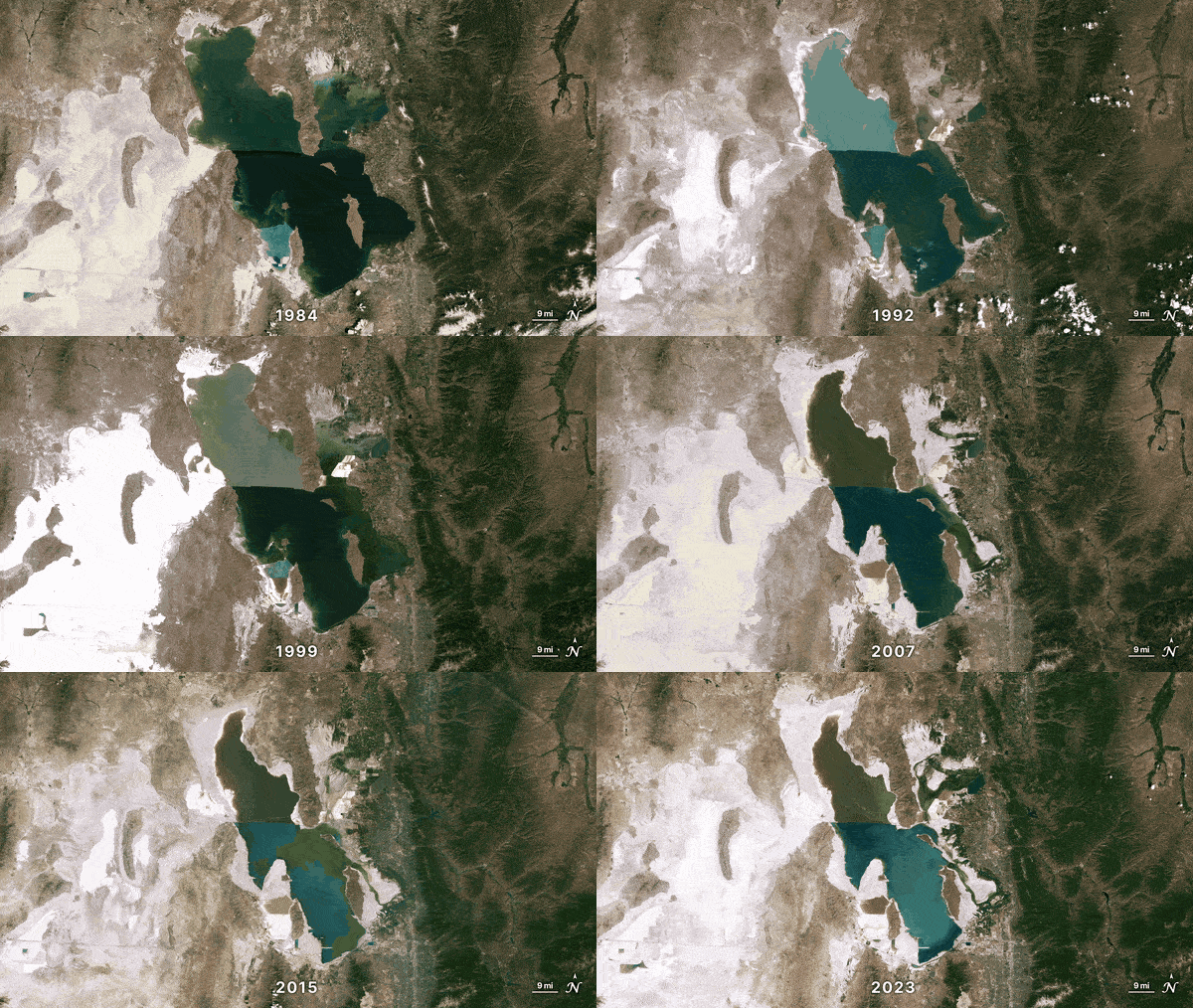
The consequences are far-reaching. The brief notes that the lake supports “over $2 billion in annual economic activity through mineral production, aquaculture, and recreation” and is “an essential stopover on the Pacific Flyway for as many as 12 million birds spanning over 350 species.” As it dries, winds blow toxic dust from the exposed lakebed toward more than 2 million people living along the Wasatch Front.
Utah’s new brief offers a path to build on what’s already working and let the state continue to lead the way. It identifies where additional federal investment could do the most good. Investments it deems “critical” include leasing water from farmers and cities, modifying existing water-delivery infrastructure, and removing thirsty invasive plants.
Those priorities closely track the recommendations outlined in a report published in July by the American Conservation Coalition. The report described how Washington could accelerate Utah’s state-led strategy, not replace it. It recommended voluntary leasing as a top priority to put more water in the lake while respecting farmers’ property rights, along with better water measurement and greater investment in municipal and industrial water conservation.
Together, the two reports describe how Washington can support Utah’s existing efforts while ensuring measurable results for the lake.
The Utah Way is Working
When the lake hit a record low in 2022, Utah could have turned to mandates and regulation to save it. Instead, it has embraced voluntary, market-based approaches. In the process, the state has created what I’ve called the freest market for water conservation in the American West.
Utah reformed its water laws so farmers and other water users can voluntarily lease or dedicate water to the lake without risking the loss of their water rights. Lawmakers created the Office of the Great Salt Lake Commissioner and established the Great Salt Lake Watershed Enhancement Trust to secure water for the lake. They also committed $200 million to agricultural water optimization projects and $250 million to meter secondary water systems.
Those efforts are beginning to pay off. Last year, the state and its partners dedicated and delivered more than 163,000 acre-feet to the lake, up from about 21,000 acre-feet in 2022. Even more is expected this year. Earlier this month, a partnership among state agencies, conservation groups, and agricultural water users arranged the release of nearly 10,000 acre-feet from Willard Bay to the lake and its wetlands during fall bird migration.
Utah is also restoring the wetlands surrounding the lake. The state recently treated 11,000 acres of the invasive plant phragmites around the lake. Every acre restored means better wildlife habitat and less water lost before it reaches the lake.
Farmers at the Table, Not on the Menu
The most important part of Utah’s approach is that it works with agriculture rather than against it. Irrigation uses about two-thirds of the water in the basin, so there is no saving the lake without farmers. The key is to make them partners in its recovery.
As Sen. Curtis put it this month, “If you single out any group, you’re just going to make them an enemy.”
The state’s report acknowledges that agriculture is an important aspect of Utah’s economy and way of life, noting that funding “will be used to work with farmers to implement water-saving measures.” It calls for $250 million to lease water voluntarily from farmers, potentially delivering more than 140,000 acre-feet annually to the lake. Another $225 million would help farmers modernize irrigation systems, reduce water use, and create more opportunities to lease conserved water.
New legislation is putting that approach into practice. The Great Salt Lake Preservation Program, established this year, pays farmers to lease water to the lake while protecting their water rights. As Great Salt Lake Commissioner Hannah Freeze recently described, the state worked with farmers, the Utah Farm Bureau, and other state agencies to develop the leasing program. This year, the state ran a pilot program with eight irrigation companies and 90 farmers to lease water for the lake.
There is much at stake in getting this right. A pending public-trust lawsuit and a petition to list a migratory shorebird under the Endangered Species Act could lead to more heavy-handed restrictions that undermine Utah’s state-led recovery efforts. Strengthening Utah’s voluntary approach could help restore the lake while reducing the likelihood of more restrictive interventions.
Utah has built a framework to recover the Great Salt Lake rooted in cooperation, property rights, and voluntary exchange. Washington can help it succeed, but Utah should lead the way.
Shawn Regan is a senior fellow at Manhattan Institute and a senior advisor to the American Conservation Coalition.