



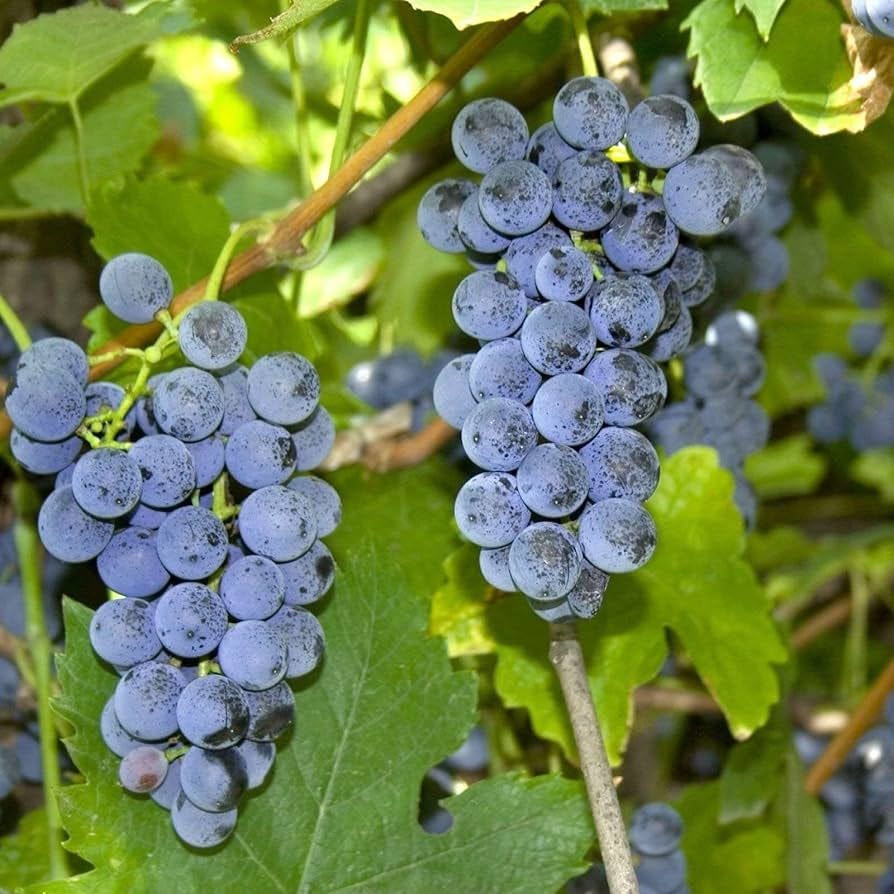
Along the Connecticut River, where languid Vermont leans against New Hampshire, grows a small, native river grape. It hangs late this time of year from the silver maples and boxelders along the riverbank, seeking whatever waning autumn light it can as the sun arcs ever lower across the ridges of the old hills. The fruit is small enough that the modern observer may not even recognize it for the grape that it is or would be forgiven for mistaking it for a blueberry. Elegant and petite with a dusty bruised hue, it bears little resemblance to the brutish factory-farmed fruits you and I now find in the produce aisle. It shares the color of the nearby river, wine-dark and indifferent to your presence. Few people know it is there and fewer still bother to pick it. Wander those riverbanks, though, crush one between your teeth, and it will bite back with a flavor sour, unplaceable, and old. It will echo to something strange but familiar, somewhere before the farms and the orchards took root, someplace unmistakably good.
Naturalist Hal Borland wrote of this same dark riverbank grape decades ago from his farm in Connecticut. “They are full of juice, deep purple juice,” he wrote, “and that juice is the very essence of untamed flavor, tart enough to pucker the mouth. In the old days, farm folk sometimes fermented a wine from them that made a strong man sit up and take notice, but now such wine is only a memory.”
You can hear his grief in that last line, penned half a century ago. We must note well, however, what specifically the old naturalist was mourning. It was not the loss of the grapes. They still hang heavy, cold, and stubborn along the equally heavy, cold, and stubborn rivers of New England. He is not even mourning the loss of the wine or its recipe.
What he is mourning is the loss of culture.
All too often we associate culture with high art, lofty ideas, and marble columns. It is better understood closer to the dirt where it originated. To a sense of place. So reveals the word itself. Culture derives from the Latin cultura, a Roman working word for the tilling of a field. Look deeper and find the root verb colere used for things we do not necessarily associate together today: to till the ground, to dwell in a place, to honor and revere. In short, all the things that allow our songs, our food, our ways and mores, everything that we understand as culture today to thrive. This is important, for as we become a more globally connected people, ever homogenized by technology, our understanding of culture becomes unrooted from the particular locations where it was formed. This is a tragedy, for there is a truth that modern life attempts to ignore:
All culture flows from place.
Amid Borland’s lamentations, there is cause for hope, however. In the hills surrounding that river and its forgotten frost grapes, little rivulets cascade, meet, and coalesce. That old stubborn river of culture yet flows.
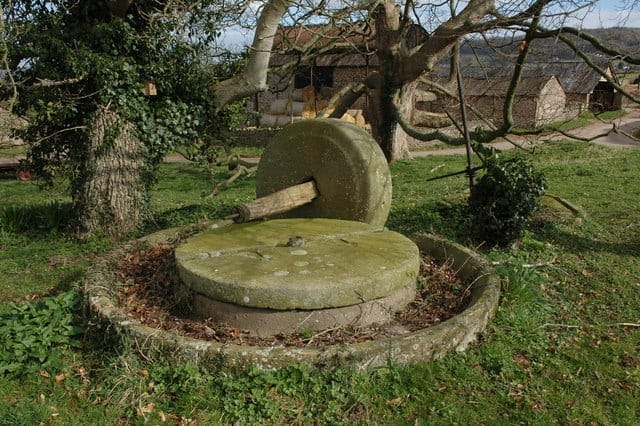
This time of year in the northern places, you will find it around the cider press. The father of the family placed it in the back yard by the old barn, and now his extended family, friends, and neighbors gather around taking turns cranking the old wheel to press the gathered apples or marvel at his ingenuity in motorizing an antique model. The children will be laughing and climbing over the tractor and its front loader cradling a massive pile of apple skin and mash. The mash will be discarded that evening at the edge of the corn field, an inadvertent offering and feast for every breed of critter bold enough to wander past the stone walls at the forest’s edge. This is culture.
The golden days of October give way to the winds of November and, as the forest sheds its leaves, the deer hunters settle into their stands and their blinds. Like Borland’s lamented lost wine, this too is a tradition and culture at risk of being forgotten. Vermont’s hunting population peaked in 1987 at roughly 143,000. By 2020, that figure had fallen by half despite Vermont’s overall population rising. There is cause for concern, yes, but the hunting culture of stewardship, responsibility, and ethics has deep roots in the hilly slopes and rocky loam of Vermont’s fields and forests. Even now, young hunters can be found being mentored by the old-timers in hunter education classes while their family members too pass down skills and knowledge. Raucous laughter still echoes off the hills celebrating a successful hunt amid the threat of a November snow, and in the gloaming light of dusk that comes too early that time of year, wood smoke rises from camps and cabins deep in the woods. This, too, is culture.
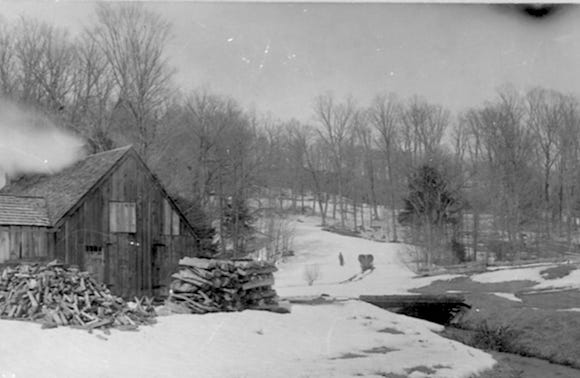
By March, the woodsmoke of the deer camp chimneys is replaced by steam from the sugaring 78shacks found in the same forests. Families may gather sap the traditional way with metal pails or through more modern tubes and machines, but the sap is gathered all the same. It takes time to boil into maple syrup, however, especially if one is using an old wood-fired arch, and it is a cold, damp, and lonely prospect in those weeks leading up to the spring equinox. Friends and neighbors arrive to ease the pang of solitude with food and drink. A crockpot or picnic basket materializes and a guitar or fiddle inevitably appears. A child excitedly offers to put another log on the fire before his mother urges prudence lest the syrup burn. Forty gallons of sap boil down into one gallon of syrup just as the traditions held by the same people in the same place for generations distill into a shared, robust, and undeniable culture.
Return now to where we began, on the bank of the Connecticut in the low, arcing light of October, with the vines hanging over the dark water and the small, inconsequential grapes waiting where they have always been. Borland called the wine into which they ferment “only a memory” but this does not have to be the last word, the final say. Memory is not a grave so much as it is a dry riverbed. The old channels that once fed it endure. They were cut deep into the valley, sloping down from those hills every golden October by farmers who wandered the riverbank to find the tart grape after the first frost. Those grapes still ripen and the frost still comes.
We are the only element missing.
You have your own version of the riverbank frost grape. It may be elderberry along your back fence or a forgotten orchard just off trail. It could be a cranberry bog or a chestnut tree, a fishing hole or a mushroom patch. A cider press, a deer camp, a sugaring shack. A people, a tradition, a place. Every slope and valley has some good treasure that no one comes for anymore, some culture out there waning in its own autumn light waiting to be conserved.
Find it before the light is gone. Let the old river run again.
Ryan Anderson is the Stakeholder Communications Manager at the American Conservation Coalition (ACC) and the author of Echoes from an Old Hollow Tree. Follow him on X @OldHollowTree.
Very well-written essay. I love the concept, and funny enough, it's almost exactly what I wrote about today in my morning journal. This is a Note I posted about an hour ago:
"One of the most overlooked facts about life is that a place feels alive or dead in direct proportion to whether or not it is a place in which you may achieve something meaningful.
For example, when I walk through a forest, I am not all that invigorated. Because I have no direct, practical relationship with the forest. If I were to walk through a forest, it would be at best to get my dog some exercise. But I do not hunt, because you cannot shoot guns in my town, and I do not know much about wild mushrooms and wild fruit . . . and so, when I go into a forest, it is very much nothing more than a scene, not a place in which there are necessarily things for me to achieve. For this reason, I do not have a practical relationship with it.
If, however, I were to learn about Morel mushrooms and discerning edible berries from non-edible berries, and how I could use any given plant for homemade soap or whatever, then I would be on the lookout, and the place would become alive, in that a hierarchy would open itself to me, and I would be looking for things, screening the world around me, in search of clues that may lead me to my goal.
What I mean to say, you see, is that information matters. That if you want to live a purposeful, meaningful, invigorated life, you must have the right information.
People do not have the right information these days, because they do not invest themselves in knowledge. They invest themselves, instead, in convenience.
This fact may offer one more explanation for the meaning crisis."